Cross Tab Fields
Drop data fields from the Field List onto cross-tab areas to define the control layout. The Cross Tab supports three field types (areas):
-
Rows (the Row Fields collection) - displays field values as row headers.
-
Columns (the Column Fields collection) - displays field values as column headers.
-
Data (the Data Fields collection) - uses field values to calculate summaries at row and column intersections.
[!Tip] You can also use calculated fields if data source fields do not suit your requirements and you need to pre-process data before it is shown in the Cross Tab.
Row and Column Fields
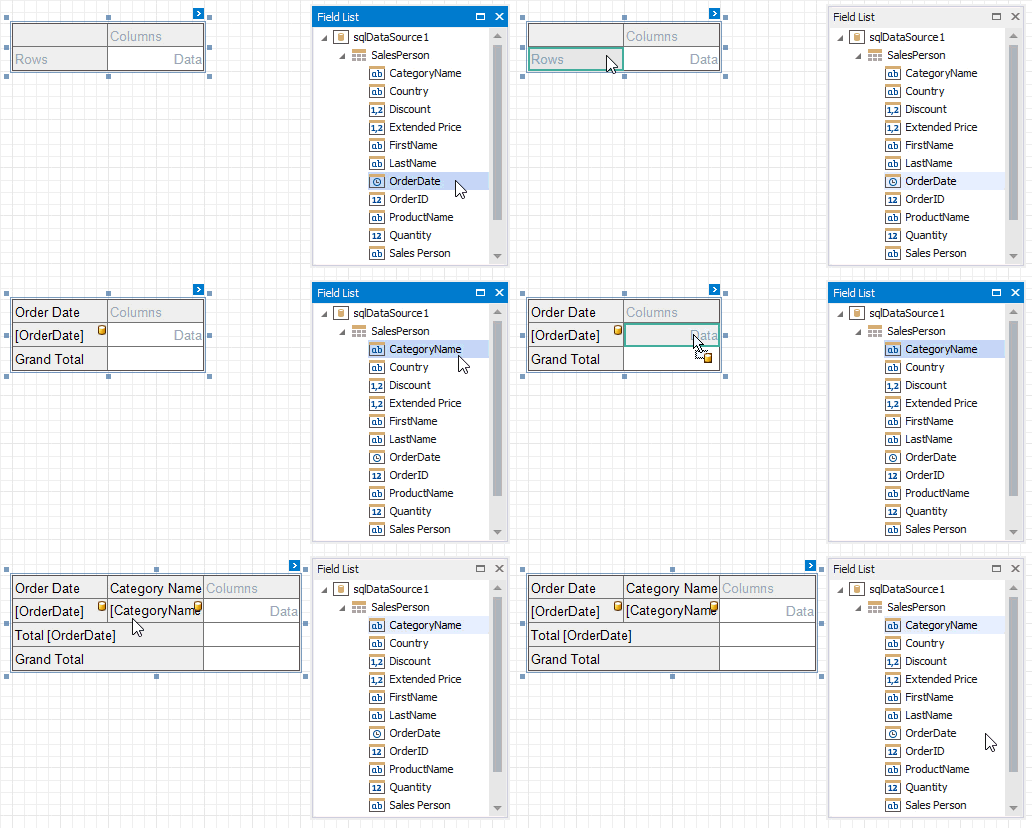
You can drop two or more data fields onto the same area to create a hierarchy. The first field's values are displayed at the root level (the first column/row), the second field's values are grouped by the first field's values and displayed at the second hierarchy level (the second column/row), and so on.
- Specify Row Fields
- Specify Column Fields
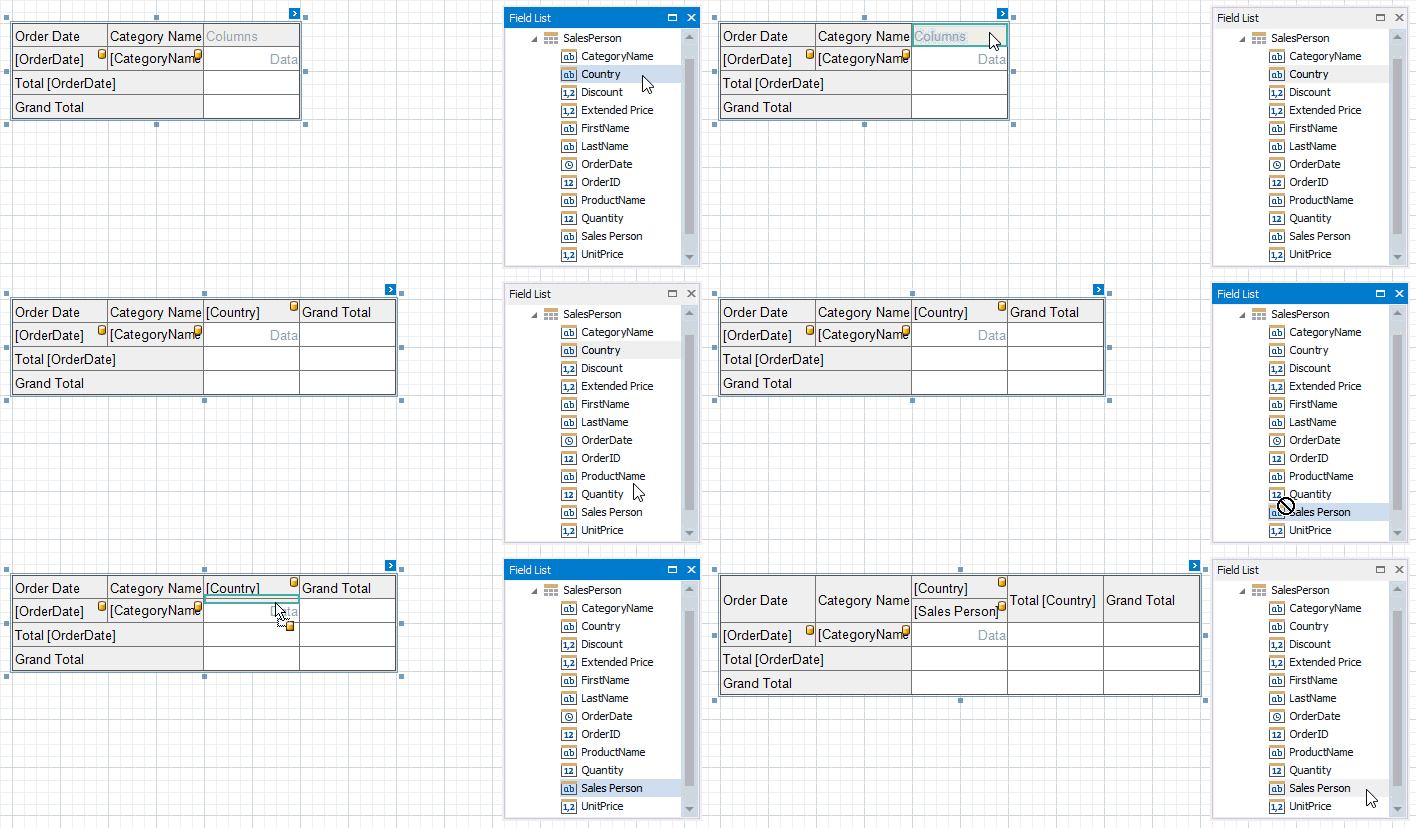
Cross Tab cells marked with a database icon become bound to the dropped fields. The corresponding rows/columns are printed in the document as many times as there are field values in the data source. The top left corner displays headers for row data fields.
Additional rows/columns are added to the Cross Tab to display total values calculated against these fields. The last row/column displays grand total values calculated against all the rows/columns.
Data Fields
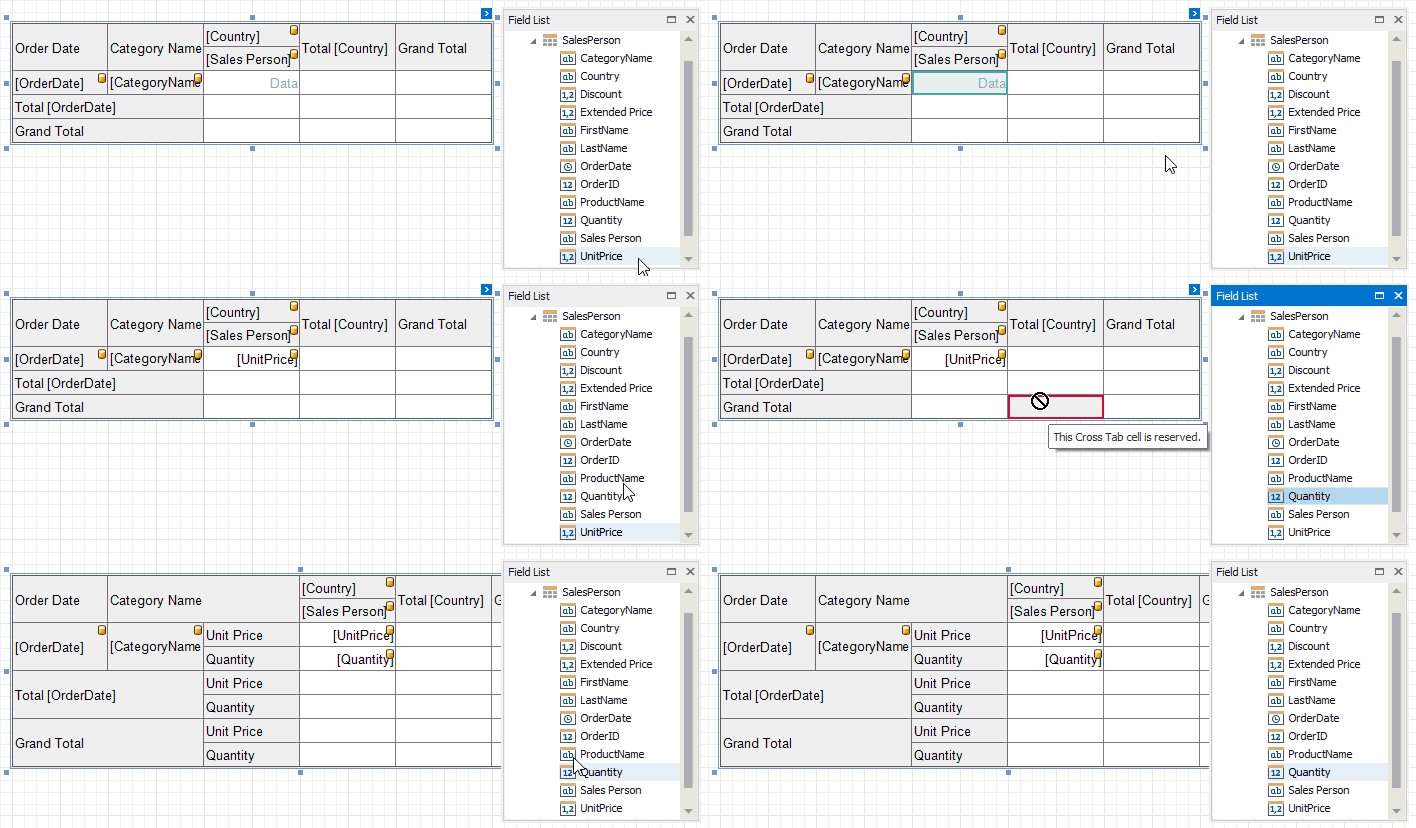
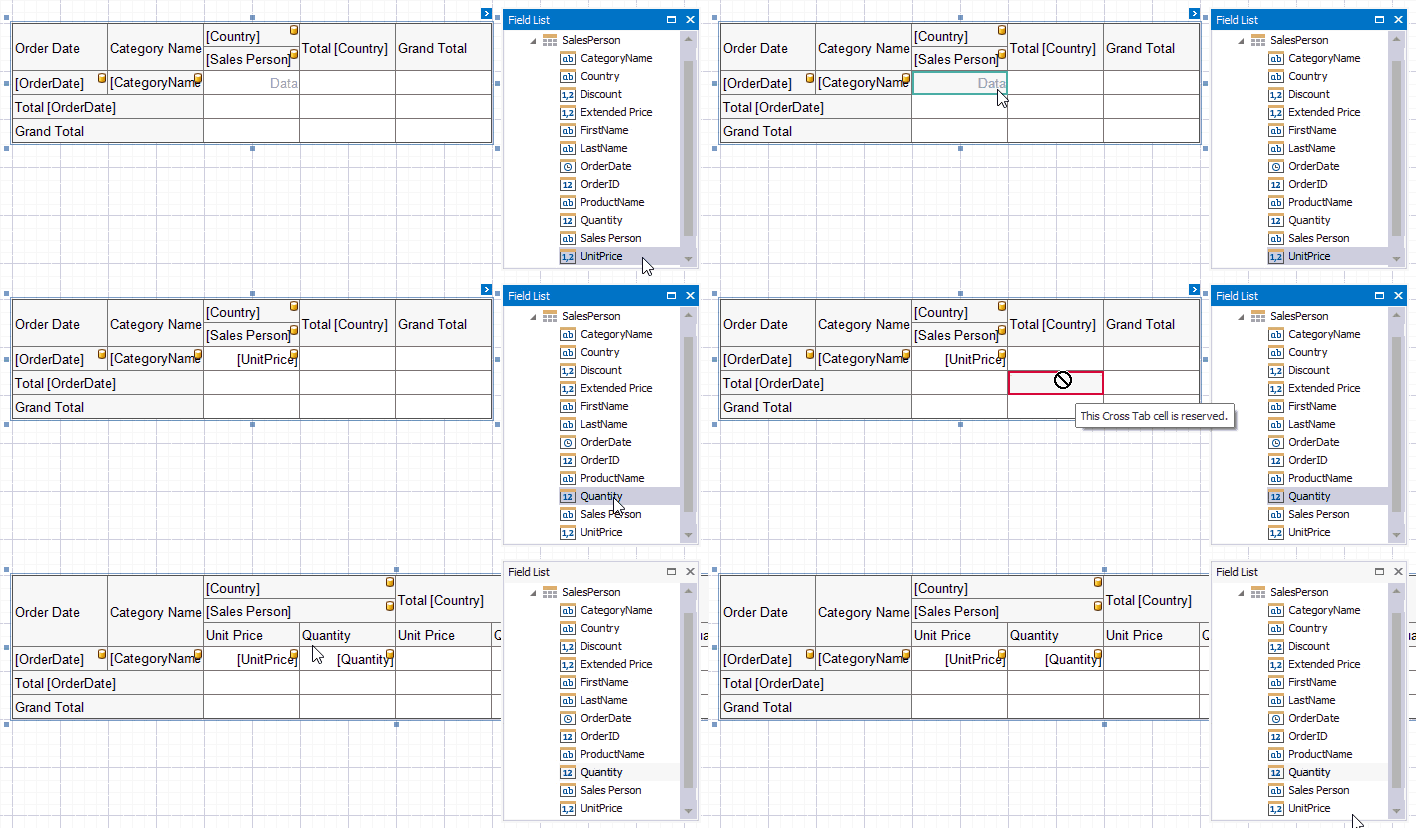
You can add two or more data fields and arrange them in two ways:
- in a column, one under the other (field headers are displayed as row headers);
- in a row, one after the other (field headers are displayed as column headers);
When the data area contains only one field, the field header is not displayed.
[!NOTE] * You cannot bind the top left corner, row/column totals, and row/column grand totals; * You cannot bind Cross Tab cells to report parameters; * You can only bind Cross Tab cells to fields from a data source and data member assigned to the Data Source and Data Member properties.
Format Field Values
Use a cell's Text Format String property to format output data.
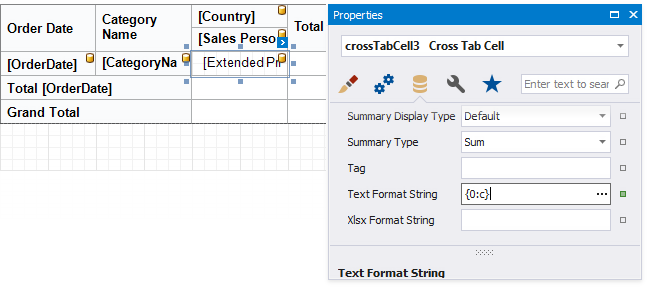
You can also use the Null Value Text property to specify the text shown when a data field's value is null or empty.